Wilma Rudolph
Wilma Rudolph: she wore a leg brace until 12, then won three Olympic golds
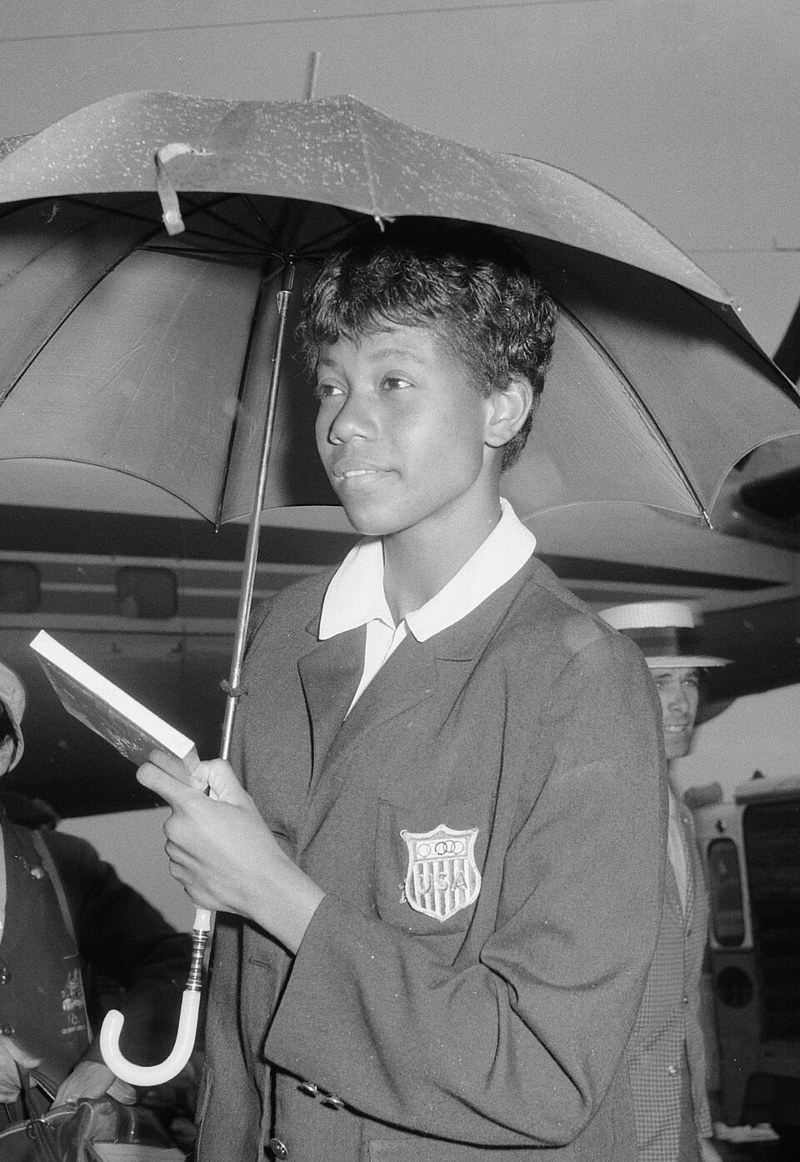
Wilma Rudolph was an American sprinter who overcame polio as a child and went on to become a world-record-holding Olympic champion. She was born prematurely, at 4.5 pounds (2.0 kg), on June 23, 1940, in Saint Bethlehem, Tennessee, the 20th of 22 children from her father's two marriages. Shortly after her birth, the family moved to Clarksville, Tennessee.
As a young child she had several illnesses, including pneumonia and scarlet fever, and at age five she contracted polio. She recovered but lost strength in her left leg and foot, and wore a leg brace until she was 12. Because there was little medical care available to African American residents of Clarksville in the 1940s, her parents sought treatment for her at the historically black Meharry Medical College in Nashville, about 50 miles (80 km) away.
For two years, Rudolph and her mother made weekly bus trips to Nashville for treatments to regain the use of her weakened leg. At home, her family gave her massage treatments four times a day, and she wore an orthopedic shoe for another two years. Because of the treatments at Meharry and the daily massages, by the time she was 12 she had overcome the effects of polio and learned to walk without a leg brace or orthopedic shoe.
Frequent illnesses made her miss kindergarten and first grade, so she was homeschooled at first and began second grade in 1947, at age seven. Once the years of treatment were over, she followed her sister Yvonne into basketball in the eighth grade, and in high school she became a starter on the team and began competing in track. Her high school coach, C. C. Gray, nicknamed her "Skeeter", for mosquito, because she moved so fast.
While she was playing for her high school basketball team, she was spotted by Ed Temple, Tennessee State University's track and field coach; the day he first saw her, he knew she was a natural athlete. In her first major track event, at the Tuskegee Institute in Alabama, she lost the race, but she was determined to continue competing and win. Temple invited the 14-year-old to his summer training program at Tennessee State, and after the camp she won all nine events she entered at an Amateur Athletic Union track meet in Philadelphia.
At 16, the youngest member of the U.S. Olympic team, she qualified for the 1956 Summer Olympics in Melbourne. She was defeated in a preliminary heat of the 200 meters but ran the third leg of the 4 × 100 m relay, and the American team won the bronze medal. Back home, she showed her high school classmates the medal and decided to try to win a gold medal at the 1960 Olympics in Rome.
Her daughter Yolanda was born in 1958, a few weeks before Rudolph enrolled at Tennessee State University in Nashville, where Temple continued as her coach. Her college education was paid by a work-study scholarship that required her to work on the campus for two hours a day.
At the U.S. Olympic trials, while still a sophomore at Tennessee State, she set a world record in the 200-meter dash that stood for eight years. In Rome she won the 100 meters in a wind-aided 11.0 seconds: the time was not credited as a world record only because the wind exceeded the maximum. Then she won the 200 meters in 24.0 seconds, after setting an Olympic record of 23.2 seconds in the opening heat.
On September 7, 1960, with the temperature climbing toward 40 °C and thousands of spectators in the stadium, Rudolph and her Tennessee State teammates Martha Hudson, Lucinda Williams and Barbara Jones won the 4 × 100-meter relay in 44.5 seconds. Rudolph ran the anchor leg and nearly dropped the baton after the pass from Williams, but she overtook Germany's anchor leg in a close finish. She had a personal reason to hope for victory: to pay tribute to Jesse Owens, the star of the 1936 Olympics, who had been her inspiration. Rudolph became the first American woman to win three gold medals in a single Olympiad.
The Italians nicknamed her "La Gazzella Nera", the Black Gazelle, and the French called her "La Perle Noire", the Black Pearl. Her hometown of Clarksville held a "Welcome Wilma Day" on October 4, 1960. Rudolph refused to attend her own celebration because it was segregated, and so that she would come, the parade was changed to be integrated: it became the first integrated event in Clarksville.
In 1962, Rudolph retired from competition at the peak of her career, still the world record-holder in the 100 and 200 meters: she wanted to leave the sport while still at her best. She did not compete at the 1964 Olympics in Tokyo. In 1963 she earned a bachelor's degree in elementary education at Tennessee State. She began her new career as a second-grade teacher at Cobb Elementary School, which she had attended as a child, and coached track at Burt High School, where she had once been a student-athlete herself. In 1981 she founded the Wilma Rudolph Foundation, which trains youth athletes.
In July 1994, shortly after her mother's death, Rudolph was diagnosed with brain cancer. She died on November 12, 1994, at her home in Brentwood, Tennessee; she was only 54 years old. In 1997, Governor Don Sundquist proclaimed her birthday, June 23, as "Wilma Rudolph Day" in Tennessee.
Timeline
Every date and figure comes from a verified claim. Select one to go to the claim and its quote.
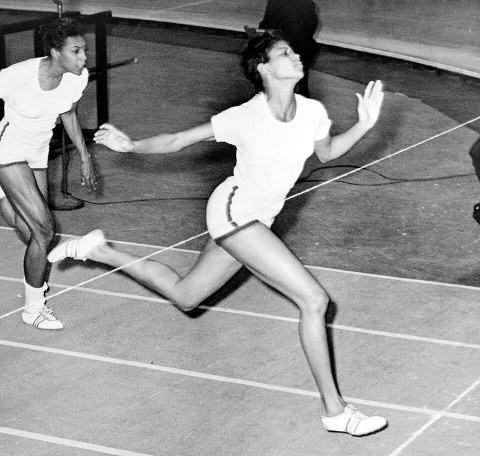
“If I won two gold medals, there would be something lacking. I'll stick with the glory I've already won like Jesse Owens did in 1936.”
The takeaway
A bad start is not a lost race: a girl who could not walk without a leg brace until she was 12 won three Olympic gold medals.
Sources
Wikipedia article: Wilma Rudolph (opens in a new tab)
This text is adapted from a revision of the Wikipedia article (opens in a new tab) and is available under CC BY-SA 4.0.
Photo at the top: Lindeboom, Henk / Anefo · CC BY-SA 3.0 nl · Wikimedia Commons (opens in a new tab)
Photo at the end: New York World-Telegram and the Sun Newspaper Photograph Collection. · public domain · Wikimedia Commons (opens in a new tab)
Claims and quotes
Every claim is taken from a Wikipedia article. Open one to see the verbatim quote.
-
Wilma Rudolph was an American sprinter who overcame polio as a child and went on to become a world-record-holding Olympic champion.
was an American sprinter who overcame polio as a child and went on to become a world-record-holding Olympic champion
Source (opens in a new tab) -
Rudolph was born prematurely, at 4.5 pounds (2.0 kg), on June 23, 1940, in Saint Bethlehem, Tennessee.
Wilma Rudolph was born prematurely to Blanche Rudolph at 4.5 pounds (2.0 kg) on June 23, 1940, in Saint Bethlehem, Tennessee (now part of Clarksville).
Source (opens in a new tab) -
Rudolph was the 20th of 22 children from her father's two marriages; shortly after her birth, the family moved to Clarksville, Tennessee.
She was the 20th of 22 children from her father Ed Rudolph's two marriages. Shortly after Wilma's birth, her family moved to Clarksville, Tennessee
Source (opens in a new tab) -
Rudolph had pneumonia and scarlet fever as a young child and contracted polio at age five; she recovered but lost strength in her left leg and foot, and wore a leg brace until she was 12.
Rudolph had several early childhood illnesses, including pneumonia and scarlet fever, and she contracted infantile paralysis (caused by the poliovirus) at age five. Rudolph recovered from polio but lost strength in her left leg and foot. Physically disabled for much of her early life, Rudolph wore a leg brace until she was 12 years old.
Source (opens in a new tab) -
Because there was little medical care for African American residents of Clarksville in the 1940s, Rudolph's parents sought treatment for her at the historically black Meharry Medical College in Nashville, about 50 miles (80 km) away.
Because there was little medical care available to African American residents of Clarksville in the 1940s, Rudolph's parents sought treatment for her at the historically black Meharry Medical College (now Nashville General Hospital at Meharry) in Nashville, Tennessee, about 50 miles (80 km) from Clarksville.
Source (opens in a new tab) -
For two years, Rudolph and her mother made weekly bus trips to Nashville for treatments to regain the use of her weakened leg.
For two years, Rudolph and her mother made weekly bus trips to Nashville for treatments to regain the use of her weakened leg.
Source (opens in a new tab) -
Her family gave Rudolph massage treatments at home four times a day, and she wore an orthopedic shoe for another two years.
Rudolph also received subsequent at-home massage treatments four times a day from members of her family and wore an orthopedic shoe for support of her foot for another two years.
Source (opens in a new tab) -
Because of the treatments at Meharry and the daily massages, by the time she was 12 Rudolph had overcome the effects of polio and learned to walk without a leg brace or orthopedic shoe.
Because of the treatments she received at Meharry and the daily massages from her family members, Rudolph was able to overcome the debilitating effects of polio and learned to walk without a leg brace or orthopedic shoe for support by the time she was 12 years old.
Source (opens in a new tab) -
Frequent illnesses made Rudolph miss kindergarten and first grade; she was homeschooled at first and began second grade in 1947, at age seven.
Rudolph was initially homeschooled due to the frequent illnesses that caused her to miss kindergarten and first grade. Rudolph began attending second grade at Cobb Elementary School in Clarksville in 1947 at age seven.
Source (opens in a new tab) -
After the years of treatment, Rudolph followed her sister Yvonne into basketball in the eighth grade; in high school she became a starter on the team and began competing in track.
After completing several years of medical treatments to regain the use of her left leg, Rudolph chose to follow in her sister Yvonne's footsteps and began playing basketball in the eighth grade. Rudolph continued to play basketball in high school, where she became a starter on the team and began competing in track.
Source (opens in a new tab) -
Her high school coach, C. C. Gray, nicknamed Rudolph "Skeeter", for mosquito, because she moved so fast.
Rudolph's high school coach, C. C. Gray, gave her the nickname of "Skeeter" (for mosquito) because she moved so fast.
Source (opens in a new tab) -
Rudolph was spotted by Ed Temple, Tennessee State's track and field coach, while playing for her high school basketball team; the day he first saw her, he knew she was a natural athlete.
While playing for her high school basketball team, Rudolph was spotted by Ed Temple, Tennessee State's track and field coach, a major break for the active young athlete. The day that Temple saw the tenth grader for the first time, he knew Rudolph was a natural athlete.
Source (opens in a new tab) -
Rudolph lost the race in her first major track event, at the Tuskegee Institute, but was determined to continue competing and win.
As a high school sophomore, Rudolph competed at Alabama's Tuskegee Institute in her first major track event. Although she lost the race, Rudolph was determined to continue competing and win.
Source (opens in a new tab) -
Temple invited 14-year-old Rudolph to his summer training program at Tennessee State; after the camp, she won all nine events she entered at an Amateur Athletic Union track meet in Philadelphia.
Temple invited 14-year-old Rudolph to join his summer training program at Tennessee State. After attending the track camp, Rudolph won all nine events she entered at an Amateur Athletic Union track meet in Philadelphia, Pennsylvania.
Source (opens in a new tab) -
At 16, as the youngest member of the U.S. Olympic team, Rudolph qualified for the 1956 Summer Olympics in Melbourne.
When Rudolph was 16 and a junior in high school, she attended the 1956 U.S. Olympic track and field team trials in Seattle, Washington, and qualified to compete in the 200-meter individual event at the 1956 Summer Olympics in Melbourne, Australia. Rudolph, the youngest member of the U.S. Olympic team, was one of five TSU Tigerbelles to qualify for the 1956 Melbourne Olympics.
Source (opens in a new tab) -
In Melbourne, Rudolph was defeated in a preliminary heat of the 200 meters but ran the third leg of the 4 × 100 m relay, and the American team won the bronze medal.
Rudolph was defeated in a preliminary heat of the 200-meter race at the Melbourne Olympic Games but ran the third leg of the 4 × 100 m relay. The American team of Rudolph, Isabelle Daniels, Mae Faggs, and Margaret Matthews, all of whom were TSU Tigerbelles, won the bronze medal
Source (opens in a new tab) -
Back home, Rudolph showed her high school classmates the bronze medal and decided to try to win a gold medal at the 1960 Summer Olympics in Rome.
After Rudolph returned to her Tennessee home from the Melbourne Olympic Games, Rudolph showed her high school classmates the bronze medal that she had won and decided to try to win a gold medal at the 1960 Summer Olympics in Rome, Italy.
Source (opens in a new tab) -
Rudolph's first child, Yolanda, was born in 1958, a few weeks before Rudolph enrolled at Tennessee State University in Nashville.
During her senior year of high school, Rudolph became pregnant with her first child, Yolanda, who was born in 1958, a few weeks before her enrollment at Tennessee State University in Nashville.
Source (opens in a new tab) -
At Tennessee State, Temple continued as Rudolph's track coach.
In 1958, Rudolph enrolled at Tennessee State, where Temple continued as her track coach.
Source (opens in a new tab) -
Rudolph's college education was paid by a work-study scholarship that required her to work on the campus for two hours a day.
Her college education was paid by her participation in a work-study scholarship program that required Rudolph to work on the TSU campus for two hours a day.
Source (opens in a new tab) -
At the U.S. Olympic trials, while still a sophomore at Tennessee State, Rudolph set a world record in the 200-meter dash that stood for eight years.
While she was still a sophomore at Tennessee State, Rudolph competed in the U.S. Olympic track and field trials at Abilene Christian University in Abilene, Texas, where she set a world record in the 200-meter dash that stood for eight years.
Source (opens in a new tab) -
In Rome, Rudolph won the 100 meters in a wind-aided 11.0 seconds; the time was not credited as a world record because the wind exceeded the maximum.
Rudolph ran the finals in the 100-meter dash in a wind-aided time of 11.0 seconds. (The record-setting time was not credited as a world record, because the wind, at 2.75 metres (3.01 yd) per second, exceeded the maximum of 2 metres (2.2 yd).)
Source (opens in a new tab) -
Rudolph won the 200 meters in 24.0 seconds, after setting an Olympic record of 23.2 seconds in the opening heat.
Rudolph won another gold medal in the finals of the 200-meter dash with a time of 24.0 seconds, after setting a new Olympic record of 23.2 seconds in the opening heat.
Source (opens in a new tab) -
On September 7, 1960, with the temperature near 40 °C and thousands of spectators in the stadium, Rudolph and her Tennessee State teammates Martha Hudson, Lucinda Williams and Barbara Jones won the 4 × 100-meter relay in 44.5 seconds.
On September 7, 1960, the temperature climbed toward 40 °C (104 °F) as thousands of spectators jammed the stadium. Rudolph combined efforts with her Olympic teammates from Tennessee State—Martha Hudson, Lucinda Williams, and Barbara Jones—to win the 4 × 100-meter relays with a time of 44.5 seconds
Source (opens in a new tab) -
Rudolph ran the anchor leg and nearly dropped the baton after the pass from Williams, but she overtook Germany's anchor leg in a close finish.
Rudolph ran the anchor leg for the American team in the finals and nearly dropped the baton after a pass from Williams, but she overtook Germany's anchor leg to win the relay in a close finish.
Source (opens in a new tab) -
Rudolph hoped for victory to pay tribute to Jesse Owens, the star of the 1936 Summer Olympics, who had been her inspiration.
Rudolph had a special, personal reason to hope for victory—to pay tribute to Jesse Owens, the celebrated American athlete and star of the 1936 Summer Olympics in Berlin, Germany, who had been her inspiration.
Source (opens in a new tab) -
Rudolph became the first American woman to win three gold medals in a single Olympiad.
Rudolph, who won a gold medal in each of these events, became the first American woman to win three gold medals in a single Olympiad.
Source (opens in a new tab) -
The Italians nicknamed Rudolph "La Gazzella Nera", the Black Gazelle, and the French called her "La Perle Noire", the Black Pearl.
The Italians nicknamed her "La Gazzella Nera" ("The Black Gazelle"). The French called her "La Perle Noire" ("The Black Pearl")
Source (opens in a new tab) -
Clarksville held a "Welcome Wilma Day" on October 4, 1960.
Rudolph's hometown of Clarksville celebrated "Welcome Wilma Day" on October 4, 1960
Source (opens in a new tab) -
Rudolph refused to attend her own celebration because it was segregated; so that she would come, the parade was changed to be integrated, the first integrated event in Clarksville.
Rudolph heard this and refused to attend her own celebration because of it being segregated. Due to the concern of Rudolph not attending her own event, the parade was changed to be integrated. She made everlasting history by standing up for what she believed in as this parade marked the first ever integrated event in her hometown of Clarksville, Tennessee.
Source (opens in a new tab) -
In 1962, Rudolph retired from competition at the peak of her career, still the world record-holder in the 100 and 200 meters.
In 1962, Rudolph retired from competition at the peak of her athletic career as the world record-holder in the 100- and 200-meter individual events and the 4 × 100-meter relays.
Source (opens in a new tab) -
Rudolph explained that she retired at the peak of her career because she wanted to leave the sport while still at her best. So she did not compete at the 1964 Olympics in Tokyo, saying she would stick with the glory she had already won, like Jesse Owens.
As Rudolph explained it, she retired at the peak of her athletic career because Rudolph wanted to leave the sport while still at her best. As such, Rudolph did not compete at the 1964 Summer Olympic Games in Tokyo, Japan, saying, "If I won two gold medals, there would be something lacking. I'll stick with the glory I've already won like Jesse Owens did in 1936."
Source (opens in a new tab) -
In 1963, Rudolph earned a bachelor's degree in elementary education at Tennessee State.
After retiring from competition, Rudolph continued her education at Tennessee State and earned a bachelor's degree in elementary education in 1963.
Source (opens in a new tab) -
Rudolph began as a second-grade teacher at Cobb Elementary School, which she had attended as a child, and coached track at Burt High School, where she had once been a student-athlete.
She began as a second-grade teacher at Cobb Elementary School, which Rudolph had attended as a child, and coached track at Burt High School, where she had once been a student-athlete herself.
Source (opens in a new tab) -
In 1981, Rudolph founded the Wilma Rudolph Foundation, which trains youth athletes.
In 1981, Rudolph established and led the Wilma Rudolph Foundation, a nonprofit organization based in Indianapolis, Indiana, that trains youth athletes.
Source (opens in a new tab) -
In July 1994, shortly after her mother's death, Rudolph was diagnosed with brain cancer.
In July 1994 (shortly after her mother's death), Rudolph was diagnosed with brain cancer.
Source (opens in a new tab) -
Rudolph died on November 12, 1994, at her home in Brentwood, Tennessee; she was only 54 years old.
Rudolph died on November 12, 1994, at her home in Brentwood, a suburb of Nashville, Tennessee; she was only 54 years old.
Source (opens in a new tab) -
In 1997, Governor Don Sundquist proclaimed June 23 as "Wilma Rudolph Day" in Tennessee.
In 1997, Governor Don Sundquist proclaimed June 23 as "Wilma Rudolph Day" in Tennessee.
Source (opens in a new tab)