Stephen Hawking
Stephen Hawking: doctors gave him two years
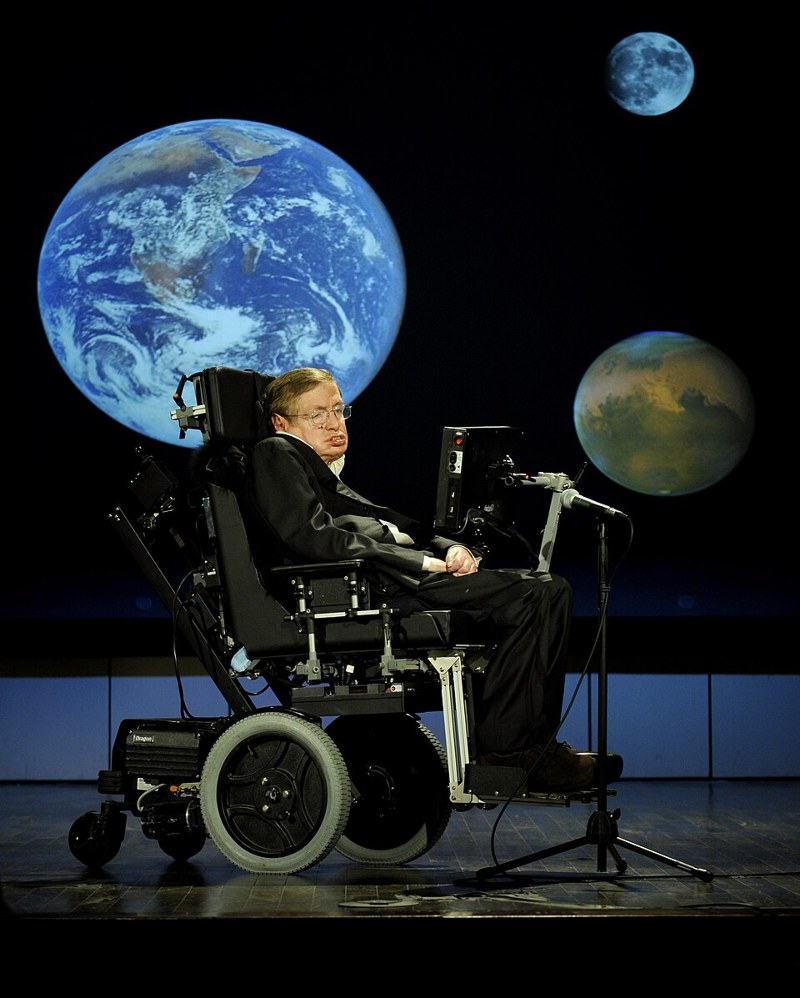
Stephen Hawking was an English theoretical astrophysicist, cosmologist, and author. He studied physics at Oxford, and in October 1962 he began graduate study in cosmology at Cambridge. Already in his final undergraduate year, he had grown increasingly clumsy: he fell on some stairs and had difficulties when rowing. The problems worsened, and his speech became slightly slurred. His family noticed the changes when he returned home for Christmas, and medical investigations were begun. In 1963, at the age of 21, he was diagnosed with motor neurone disease. Doctors gave him a life expectancy of two years.
After the diagnosis, Hawking fell into a depression. His doctors advised him to continue with his studies, but he felt there was little point. His disease, however, progressed more slowly than doctors had predicted: although he had difficulty walking unsupported and his speech was almost unintelligible, the initial diagnosis that he had only two years to live proved unfounded. With the encouragement of his supervisor Dennis Sciama, one of the founders of modern cosmology, he returned to his work.
Hawking had met his future wife, Jane Wilde, at a party in 1962, the year before his diagnosis. In October 1964 they became engaged, aware of his physical limitations and shortened life expectancy, and on 14 July 1965 they married. Hawking later recalled: "Before I got motor neuron disease, I was bored with life. But the prospect of an early death made me realize life was really worth living."
In 1966, Hawking obtained his PhD in applied mathematics and theoretical physics. In the late 1960s, he began to use crutches and could no longer give lectures regularly. As he slowly lost the ability to write, he learned to see equations in terms of geometry. Werner Israel, who worked with Hawking in the early 1970s, later compared his achievements to Mozart composing an entire symphony in his head.
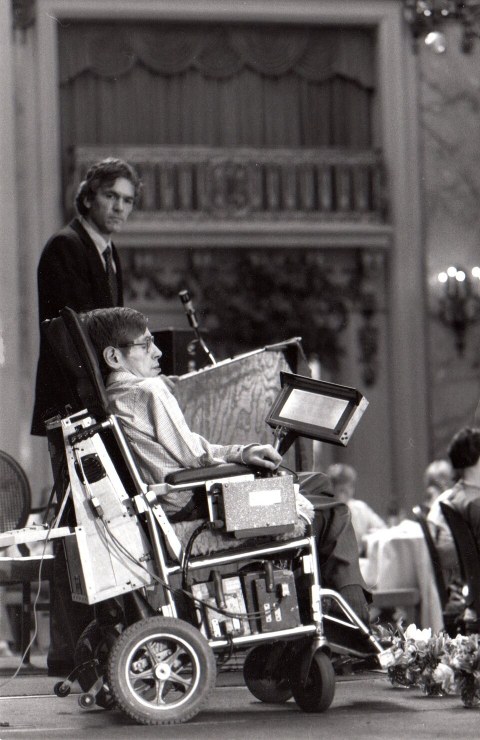
Hawking was unwilling to accept help or make concessions for his disabilities. It took much persuasion to get him to accept a wheelchair, but he ultimately became notorious for the wildness of his driving. Jane Hawking later noted: "Some people would call it determination, some obstinacy. I've called it both at one time or another."
In 1974, Hawking claimed that black holes emit radiation, known today as Hawking radiation. At first it was controversial, but by the late 1970s the discovery was widely accepted as a major breakthrough in theoretical physics. Between 1979 and 2009, he was the Lucasian Professor of Mathematics at Cambridge, widely viewed as one of the most prestigious academic posts in the world.
In mid-1985, during a visit to CERN, Hawking contracted pneumonia, which in his condition was life-threatening. He was so ill that Jane was asked if life support should be terminated. She refused, but the illness led to a tracheotomy, which required round-the-clock nursing care and caused the loss of what remained of his speech.
At first he raised his eyebrows to choose letters on a spelling card; then, in 1986, he received a computer program called the "Equalizer" and could simply press a switch to select phrases, words or letters. His speech had been deteriorating for years: by the late 1970s, only his family and closest friends could understand him, and someone who knew him well had to interpret for others. Released from that need, Hawking commented: "I can communicate better now than before I lost my voice." Originally, he pressed the switch with his hand and could produce up to 15 words per minute. He gradually lost the use of his hand, and from 2005 he controlled his communication device with movements of his cheek muscles, at about one word per minute.
One of the first messages Hawking produced with his speech-generating device was a request for his assistant to help him finish writing A Brief History of Time. In 1982, to finance his children's education and home expenses, he had decided to write a popular book about the universe that would be accessible to the general public. Published in 1988, the book proved to be an extraordinary success and appeared on the Sunday Times bestseller list for a record-breaking 237 weeks.
In late 2006, Hawking said that one of his greatest unfulfilled desires was to travel to space. Besides personal ambition, he wanted to increase public interest in spaceflight and to show the potential of people with disabilities. On 26 April 2007, he flew aboard a specially modified jet to experience weightlessness; it was described as a successful test of whether he could withstand the g-forces involved in spaceflight. But commercial flights to space did not begin before his death.
Stephen Hawking died at his home in Cambridge on 14 March 2018, at the age of 76, having lived more than 50 years after his diagnosis. His ashes were interred in Westminster Abbey, between the graves of Isaac Newton and Charles Darwin.
Timeline
Every date and figure comes from a verified claim. Select one to go to the claim and its quote.
“Before I got motor neuron disease, I was bored with life. But the prospect of an early death made me realize life was really worth living.”
The takeaway
A prognosis is not a verdict: Hawking was given two years to live, but he returned to his work, predicted that black holes emit radiation, wrote a bestseller about the universe and lived to 76.
Sources
Wikipedia article: Stephen Hawking (opens in a new tab)
This text is adapted from a revision of the Wikipedia article (opens in a new tab) and is available under CC BY-SA 4.0.
Photo at the top: NASA/Paul E. Alers · public domain · Wikimedia Commons (opens in a new tab)
Photo at the end: woodleywonderworks · CC BY 2.0 · Wikimedia Commons (opens in a new tab)
Claims and quotes
Every claim is taken from a Wikipedia article. Open one to see the verbatim quote.
-
Stephen Hawking was an English theoretical astrophysicist, cosmologist, and author.
was an English theoretical astrophysicist, cosmologist, and author
Source (opens in a new tab) -
In October 1962, after receiving a first-class degree in physics, Hawking began his graduate work at Trinity Hall, Cambridge.
After receiving a first-class BA degree in physics and completing a trip to Iran with a friend, he began his graduate work at Trinity Hall, Cambridge, in October 1962.
Source (opens in a new tab) -
Hawking planned graduate study in cosmology at the University of Cambridge.
A first-class degree was a condition of acceptance for his planned graduate study in cosmology at the University of Cambridge.
Source (opens in a new tab) -
During his final year at Oxford, Hawking grew increasingly clumsy: he fell on some stairs and had difficulties when rowing.
During his final year at Oxford, he had experienced increasing clumsiness, including a fall on some stairs and difficulties when rowing.
Source (opens in a new tab) -
The problems worsened and his speech became slightly slurred; his family noticed the changes when he returned home for Christmas, and medical investigations were begun.
The problems worsened, and his speech became slightly slurred. His family noticed the changes when he returned home for Christmas, and medical investigations were begun.
Source (opens in a new tab) -
In 1963, at age 21, Hawking was diagnosed with motor neurone disease; doctors gave him a life expectancy of two years.
He was diagnosed with MND at age 21, in 1963; doctors gave him a life expectancy of two years.
Source (opens in a new tab) -
After the diagnosis, Hawking fell into a depression; his doctors advised him to continue with his studies, but he felt there was little point.
After being diagnosed with motor neurone disease, Hawking fell into a depression. Although his doctors advised that he continue with his studies, he felt there was little point.
Source (opens in a new tab) -
Hawking's supervisor was Dennis Sciama, one of the founders of modern cosmology.
he had been assigned Dennis William Sciama, one of the founders of modern cosmology, as a supervisor
Source (opens in a new tab) -
His disease progressed more slowly than doctors had predicted.
His disease progressed more slowly than doctors had predicted.
Source (opens in a new tab) -
Although Hawking had difficulty walking unsupported and his speech was almost unintelligible, the two-year prognosis proved unfounded, and with Sciama's encouragement he returned to his work.
Although Hawking had difficulty walking unsupported, and his speech was almost unintelligible, an initial diagnosis that he had only two years to live proved unfounded. With Sciama's encouragement, he returned to his work.
Source (opens in a new tab) -
Hawking met his future wife, Jane Wilde, at a party in 1962, the year before his diagnosis.
Hawking met his future wife, Jane Wilde, at a party in 1962. The following year, Hawking was diagnosed with motor neurone disease
Source (opens in a new tab) -
In October 1964, they became engaged, aware of his physical limitations and shortened life expectancy.
In October 1964, the couple became engaged, while aware of Hawking's new physical limitations and shortened life expectancy.
Source (opens in a new tab) -
Hawking and Jane Wilde married on 14 July 1965.
The two were married on 14 July 1965 in their shared hometown of St Albans.
Source (opens in a new tab) -
Hawking recalled that the prospect of an early death made him realise life was really worth living.
Hawking later recalled: "Before I got motor neuron disease, I was bored with life. But the prospect of an early death made me realize life was really worth living."
Source (opens in a new tab) -
In 1966, Hawking obtained his PhD in applied mathematics and theoretical physics.
in 1966, he obtained his PhD in applied mathematics and theoretical physics
Source (opens in a new tab) -
In the late 1960s, Hawking began to use crutches and could no longer give lectures regularly.
In the late 1960s, Hawking's physical abilities declined: he began to use crutches and could no longer give lectures regularly.
Source (opens in a new tab) -
As he lost the ability to write, Hawking learned to see equations in terms of geometry.
As he slowly lost the ability to write, he developed compensatory visual methods, including seeing equations in terms of geometry.
Source (opens in a new tab) -
In the early 1970s, Hawking worked with Werner Israel.
Hawking's early 1970s work with Brandon Carter, Werner Israel, and David C. Robinson strongly supported John Archibald Wheeler's no-hair theorem
Source (opens in a new tab) -
Werner Israel compared the achievements to Mozart composing an entire symphony in his head.
Werner Israel later compared the achievements to Mozart composing an entire symphony in his head.
Source (opens in a new tab) -
Hawking was unwilling to accept help or make concessions for his disabilities.
Hawking was unwilling to accept help or make concessions for his disabilities.
Source (opens in a new tab) -
It took much persuasion to get Hawking to accept a wheelchair, but he became notorious for the wildness of his driving.
He required much persuasion to accept the use of a wheelchair at the end of the 1960s, but ultimately became notorious for the wildness of his wheelchair driving.
Source (opens in a new tab) -
Jane Hawking called it both determination and obstinacy.
Jane Hawking later noted: "Some people would call it determination, some obstinacy. I've called it both at one time or another."
Source (opens in a new tab) -
Hawking predicted that black holes emit radiation, often called Hawking radiation.
the theoretical prediction that black holes emit radiation, often called Hawking radiation
Source (opens in a new tab) -
In 1974, Hawking claimed that black holes emit radiation, known today as Hawking radiation.
In 1974, Hawking claimed that black holes emit radiation, known today as Hawking radiation
Source (opens in a new tab) -
Hawking radiation was controversial at first; by the late 1970s, the discovery was widely accepted as a major breakthrough in theoretical physics.
Initially, Hawking radiation was controversial. By the late 1970s, and following the publication of further research, the discovery was widely accepted as a major breakthrough in theoretical physics.
Source (opens in a new tab) -
Between 1979 and 2009, Hawking was the Lucasian Professor of Mathematics at Cambridge, widely viewed as one of the most prestigious academic posts in the world.
Between 1979 and 2009, he was the Lucasian Professor of Mathematics at Cambridge, widely viewed as one of the most prestigious academic posts in the world.
Source (opens in a new tab) -
In mid-1985, during a visit to CERN, Hawking contracted pneumonia, which in his condition was life-threatening.
During a visit to CERN on the border of France and Switzerland in mid-1985, Hawking contracted pneumonia, which in his condition was life-threatening
Source (opens in a new tab) -
Hawking was so ill that Jane was asked if life support should be terminated; she refused.
he was so ill that Jane was asked if life support should be terminated. She refused
Source (opens in a new tab) -
The tracheotomy that followed caused the loss of what remained of his speech.
the consequence was a tracheotomy, which required round-the-clock nursing care and caused the loss of what remained of his speech
Source (opens in a new tab) -
At first, Hawking raised his eyebrows to choose letters on a spelling card; in 1986, he received a computer program called the "Equalizer".
For his communication, Hawking initially raised his eyebrows to choose letters on a spelling card, but in 1986 he received a computer program called the "Equalizer"
Source (opens in a new tab) -
With the program, Hawking could simply press a switch to select phrases, words or letters.
Hawking could now simply press a switch to select phrases, words or letters
Source (opens in a new tab) -
By the late 1970s, only Hawking's family and closest friends could understand his speech, and someone who knew him well interpreted it for others.
Hawking's speech deteriorated, and by the late 1970s he could be understood by only his family and closest friends. To communicate with others, someone who knew him well would interpret his speech into intelligible speech.
Source (opens in a new tab) -
Released from the need for an interpreter, Hawking commented that he could communicate better than before he lost his voice.
Released from the need to use somebody to interpret his speech, Hawking commented that "I can communicate better now than before I lost my voice."
Source (opens in a new tab) -
Originally, Hawking pressed the switch with his hand and could produce up to 15 words per minute.
Originally, Hawking activated a switch using his hand and could produce up to 15 words per minute.
Source (opens in a new tab) -
Having gradually lost the use of his hand, from 2005 Hawking controlled his communication device with movements of his cheek muscles, at about one word per minute.
Hawking gradually lost the use of his hand, and in 2005 he began to control his communication device with movements of his cheek muscles, with a rate of about one word per minute.
Source (opens in a new tab) -
One of the first messages Hawking produced with his speech-generating device was a request for his assistant to help him finish writing A Brief History of Time.
One of the first messages Hawking produced with his speech-generating device was a request for his assistant to help him finish writing A Brief History of Time.
Source (opens in a new tab) -
In 1982, to finance his children's education and home expenses, Hawking decided to write a popular book about the universe that would be accessible to the general public.
In 1982, to finance his children's education and home-expenses, Hawking decided to write a popular book about the universe that would be accessible to the general public.
Source (opens in a new tab) -
A Brief History of Time was published in 1988 and proved to be an extraordinary success.
The book was published in April 1988 in the US and in June in the UK, and it proved to be an extraordinary success
Source (opens in a new tab) -
A Brief History of Time appeared on the Sunday Times bestseller list for a record-breaking 237 weeks.
His book A Brief History of Time appeared on the Sunday Times bestseller list for a record-breaking 237 weeks.
Source (opens in a new tab) -
In late 2006, Hawking said that one of his greatest unfulfilled desires was to travel to space.
In late 2006, Hawking stated that one of his greatest unfulfilled desires was to travel to space.
Source (opens in a new tab) -
Besides personal ambition, Hawking wanted to increase public interest in spaceflight and to show the potential of people with disabilities.
Besides personal ambition, he was motivated by the desire to increase public interest in spaceflight and to show the potential of people with disabilities.
Source (opens in a new tab) -
On 26 April 2007, Hawking flew aboard a specially modified jet to experience weightlessness.
On 26 April 2007, Hawking flew aboard a specially-modified Boeing 727-200 jet operated by Zero-G Corp off the coast of Florida to experience weightlessness.
Source (opens in a new tab) -
The flight was described as a successful test of whether Hawking could withstand the g-forces involved in spaceflight, but commercial flights to space did not begin before his death.
It was described as a successful test to see if he could withstand the g-forces involved in spaceflight. At the time, the date of Hawking's trip to space was projected to be as early as 2009, but commercial flights to space did not commence before his death.
Source (opens in a new tab) -
Hawking died at his home in Cambridge on 14 March 2018, at the age of 76.
Hawking died at his home in Cambridge on 14 March 2018, at the age of 76.
Source (opens in a new tab) -
Hawking lived more than 50 years after his diagnosis of motor neurone disease.
having lived more than 50 years following his diagnosis of motor neurone disease
Source (opens in a new tab) -
Hawking's ashes were interred in Westminster Abbey, between the graves of Isaac Newton and Charles Darwin.
a service of thanksgiving was held at Westminster Abbey on 15 June 2018, after which his ashes were interred in the Abbey's nave, between the graves of scientists Isaac Newton and Charles Darwin
Source (opens in a new tab)